Journal Publications Dr. Yunmei Liu Leads Study Connecting Driver Workload and Situation Awareness to Intersection Design
Applied Ergonomics, 2024
Dr. Yunmei Liu is the first author of “Analysis of driver behavior at grade-separated intersections to support design,” published online in Applied Ergonomics on April 15, 2024. Co-authors include David Kaber, Christopher Cunningham, Thomas Chase, and Kihyun Pyo, with collaborators at the University of Florida and NC State University’s Institute for Transportation Research and Education.
Designing Intersections Around Driver Capabilities
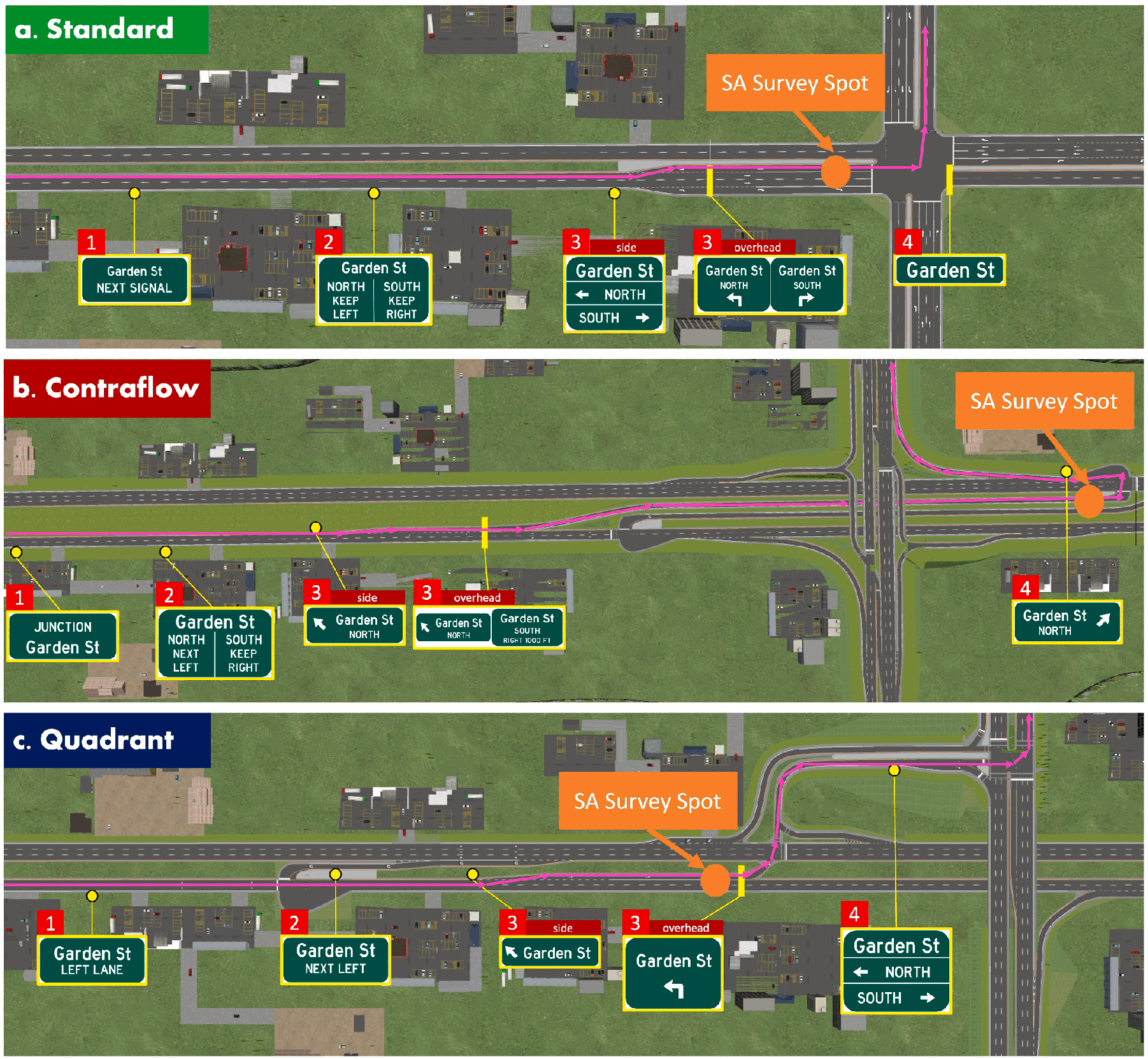
The study connects driver cognitive workload and situation awareness with observable driving behavior to inform intersection and signage design. A driving-simulator experiment compared standard, contraflow grade-separated, and quadrant grade-separated intersections under different lane-assignment sign conditions.
Drivers navigating the contraflow design experienced higher workload and lower situation awareness, alongside difficulties such as delayed or missed lane changes and speeding. In the quadrant design, workload increased but situation awareness remained stable, with lane-specific guidance supporting earlier lane changes.
These findings highlight why roadway design must account for how drivers understand and respond to unfamiliar configurations, not only traffic flow. The research provides evidence for intersection and signage designs that support situation awareness, manage cognitive demands, and help drivers make timely maneuvers.
Read the publication in Applied Ergonomics · View the abstract on PubMed